






















Foil, Embossing or Spot UV? A Label Finish Decision Guide
Choose a label finish by the effect you need, the artwork it must reproduce and the evidence required before approving production.
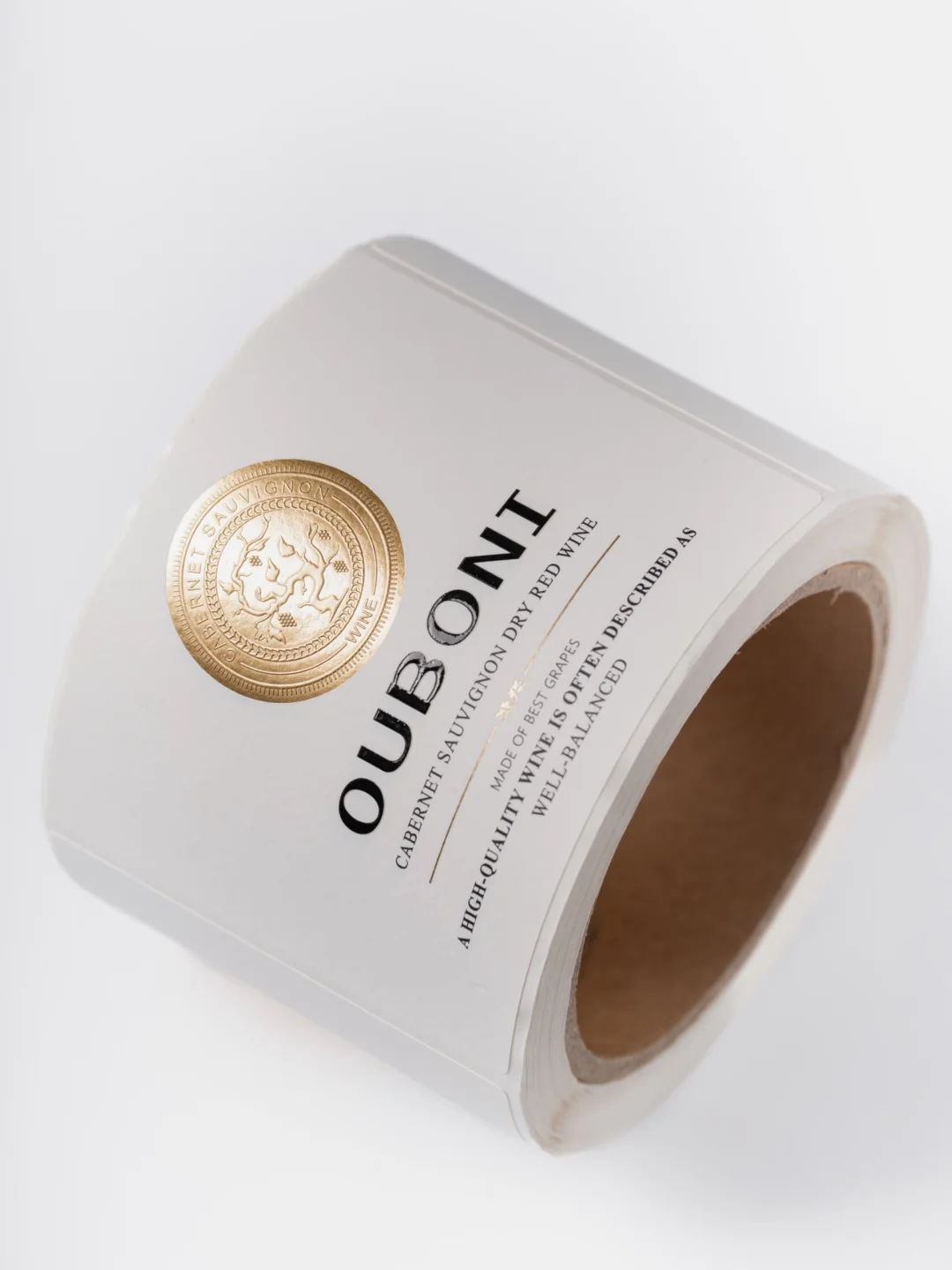
Start with the effect the label needs to deliver. Foil creates a reflective accent; conventional embossing changes the surface relief; spot UV creates selected areas of cured varnish that can add gloss and, in some processes, a raised effect. They can work together, but a finish should earn its place by making the design clearer or more distinctive.
For a first order, choose one principal effect, identify where it belongs in the artwork, and approve a representative sample. Adding several finishes before settling the material and layout makes the result harder to evaluate and the quote harder to compare.
Match the finish to the design job
| Design goal | Process to discuss | Approval question |
|---|---|---|
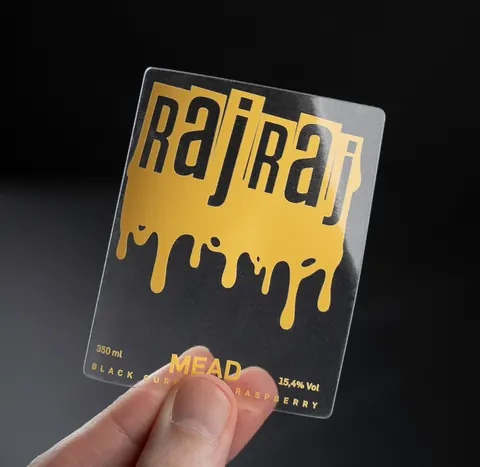
| A metallic logo or border | Hot foil or cold transfer | Does the chosen shade and reflection work on the actual background? |
| A paper-based tactile detail | Conventional embossing or debossing | Can the proposed stock and tooling reproduce the intended relief? |
| Gloss contrast over selected artwork | Spot UV or another specified spot varnish | Is the desired result flat gloss, texture or raised gloss? |
| A raised decorative element | A suitable high-build digital embellishment process | What creates the height, and how does the sample handle? |
Treat these as starting points for a specification, not interchangeable product names. A “3D” description may refer to a tactile coating, an embossed shape or an optical effect. Ask for the process name and a sample, not just a photograph.
Understand which process the supplier is quoting
Hot foil and cold transfer
Hot stamping uses a heated tool to transfer a decorative layer. KURZ describes its use across paper, board and label applications, with metallic and other visual effects. The result still depends on the selected transfer grade, substrate and process settings; “gold foil” alone is not a complete specification.
Cold transfer for narrow-web printing uses printed adhesive and a transfer material rather than a heated stamping die. KURZ’s web-fed guidance distinguishes this route and describes applications on suitable paper and film label substrates. Ask whether your quote includes hot foil, cold transfer or digital foil, and which steps or tooling are included.
Embossing and raised coatings
Conventional embossing forms relief in the substrate; tooling manufacturer Hinderer + Mühlich describes blind embossing as moulding the material without adding a decorative transfer layer. Raised digital embellishment can instead build a tactile layer on the surface. Scodix, for example, describes controlled polymer placement and repeated layering in its technology. These routes can produce different edges and textures, so do not approve one process from a sample made with another.
For gloss decoration, clarify whether the specification calls for a thin spot varnish or a substantial raised layer. Describe the desired effect in ordinary terms—subtle shine, strong contrast or noticeable texture—then let the technical specification identify how to achieve it.
Build a finish brief around the artwork
Mark the areas to be decorated on a separate, clearly named overlay. Include a normal view showing how the effect relates to the printed artwork. The supplier should confirm file requirements and minimum reproducible detail for the chosen equipment, material and effect.
- Identify the most important element: logo, border, illustration or background pattern.
- Flag fine lines, small gaps and reversed-out text for a feasibility check.
- Show where a finish must align with printed edges.
- State which areas must remain undecorated, including variable printing zones.
- Supply a physical reference if a particular shade or texture matters.
Do not make a generic software setting the production specification. Ask the supplier to explain any artwork adjustment before approving it. If a tiny detail cannot be reproduced reliably, simplify that feature while keeping the main visual hierarchy intact.
Compare two controlled samples
A useful sample comparison changes one decision at a time. For example, compare the same logo in two foil shades on the same stock, or compare flat gloss and raised gloss on one design. Changing the material, ink color and finish simultaneously makes it difficult to identify what caused the preference.
Review each sample on the intended container. Rotate it under normal lighting, read it at shelf distance, and handle it as a customer would. Decide whether the finish improves the label when seen briefly as well as close up. Check that reflected light does not make necessary information difficult to read.
Record the accepted sample identifier and the construction it represents. If the supplier proposes a substitute stock, coating or finish later, ask what must be checked again. A similar name or a close photograph is not enough evidence for a material change.
Put cost and performance into the same conversation
Ask for a base version and a version with the selected embellishment, using identical quantities and delivery assumptions. Request a breakdown of tooling, setup and recurring costs where available. This makes the premium attributable to the finish visible without assuming that one process is always cheaper.
Discuss handling and the product environment before release. For a bottle exposed to condensation, the finished construction needs an agreed wet-use check. For labels that receive later printing, confirm compatibility at the intended printing area. Decorative samples are evidence of appearance, not a substitute for these checks.
Common questions
Can foil and embossing be combined?
They can be combined in suitable constructions and processes. Ask whether the proposal uses a combined operation or separate steps, and approve alignment and relief on a representative sample.
Is a raised UV effect the same as embossing?
Not necessarily. Raised coatings add material to the surface, whereas conventional embossing forms the substrate. Specify the intended feel and production method.
Which finish should a small brand start with?
Start with the effect that supports the strongest part of the design, then compare sample and price evidence. Explore foil, embossing and spot UV, or request samples before finalizing artwork.